Reading Your Minnesota Astigmatism Prescription: What Do SPH, CYL, and AXIS Mean?
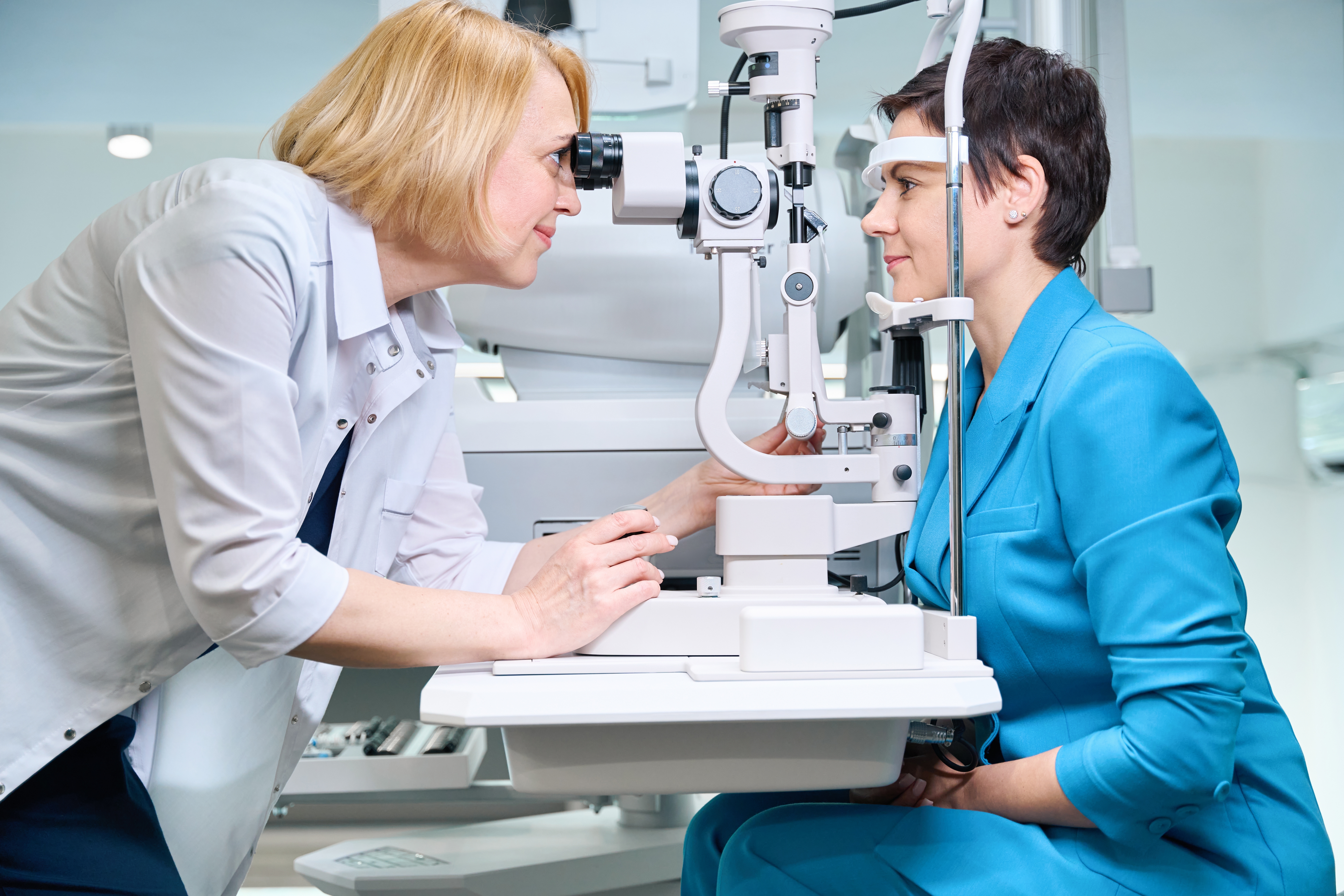
If you have ever looked at your glasses or contact lens prescription and felt confused by the abbreviations, you are not alone. Many Minnesota patients see terms like SPH, CYL, and AXIS and are unsure what they mean, especially when astigmatism is involved. Understanding the basics of your astigmatism prescription can help you feel more confident about your vision correction and know when it may be time for an updated eye exam.
At Eye Care Center, with locations in Maple Grove, Maplewood, and Fridley, patients can receive comprehensive eye exams and prescription guidance tailored to their vision needs.
What Is Astigmatism?
Astigmatism is a common refractive error that happens when the front surface of the eye is shaped more like a football than a perfectly round basketball. Because of this uneven curvature, light does not focus evenly on the retina. The result can be blurry, distorted, or shadowed vision at both near and far distances.
For Minnesota patients, astigmatism can affect everyday tasks like reading road signs, working on a computer, watching television, or driving at night. Some people are born with astigmatism, while others may notice it changing over time.
What Does SPH Mean?
SPH stands for sphere. This number shows the main lens power needed to correct nearsightedness or farsightedness. If the SPH number has a minus sign, it means you are nearsighted and have trouble seeing far away. If it has a plus sign, it means you are farsighted and may have more difficulty with close-up vision.
Even if you have astigmatism, your prescription may still include an SPH value because many people need correction for more than one type of refractive error.
What Does CYL Mean?
CYL stands for cylinder, and this is the part of your prescription that relates directly to astigmatism. The CYL number shows how much lens power is needed to correct the uneven curve of the eye.
If there is no number listed under CYL, you may not have a measurable amount of astigmatism in that eye. If there is a CYL value, your lenses need additional correction to help light focus more evenly. For patients in Maple Grove, Maplewood, and Fridley, this is one reason a precise eye exam matters when updating glasses or contact lenses.
What Does AXIS Mean?
AXIS tells the lab where the astigmatism correction should be placed in the lens. It is measured in degrees from 1 to 180. The AXIS number does not describe strength. Instead, it describes direction.
For example, two people may have the same CYL number but different AXIS measurements. Their lenses would not be the same because the correction needs to sit in a different position. This is why an astigmatism prescription is more detailed than a basic vision correction.
Common Signs Your Astigmatism Prescription May Need Updating
Astigmatism can change over time, and even small prescription changes can affect comfort and clarity. You may need an updated eye exam if you notice:
- Blurry or distorted vision at any distance
- Eye strain during reading or computer work
- Headaches after visual tasks
- Squinting to see clearly
- Trouble with night driving
- Halos or glare around lights
- Contact lenses that no longer feel clear or stable
If these symptoms sound familiar, your current astigmatism prescription may no longer be giving you the best correction.
Glasses And Contacts For Astigmatism
Astigmatism can often be corrected with glasses, toric contact lenses, or other customized lens options. Glasses use the SPH, CYL, and AXIS values to create lenses that sharpen vision. Contact lenses for astigmatism require a careful fit because the lens must stay in the correct position on the eye to provide clear, stable vision.
A comprehensive exam at Eye Care Center can help determine whether glasses, contacts, or both are the right fit for your lifestyle.
Why Understanding Your Prescription Matters
You do not need to memorize every number on your prescription, but knowing what SPH, CYL, and AXIS mean can make your eye care feel less confusing. It can also help you ask better questions during your exam and understand why precise measurements are important for astigmatism correction.
Schedule an astigmatism eye exam with Eye Care Center at 7884 Main Street North, Maple Grove, MN 55369, (763) 420-6981 - 1965 11th Avenue E, Suite 101, Maplewood, MN 55109, (651) 777-3555 - or 1202 E Moore Lake Dr, Fridley, MN 55432, (763) 308-8440.

Eye Care
Services

Keep
In Touch


Hours
- Monday 09:00 AM - 06:00 PM
- Tuesday 10:00 AM - 06:00 PM
- Wednesday 09:00 AM - 06:00 PM
- Thursday 09:00 AM - 06:00 PM
- Friday 08:00 AM - 05:00 PM
© 2026 Eye Care Center. All Rights Reserved - Accessibility Statement - Sitemap
Powered by: